Did you know that in Louisiana alone, the Emergency Department sees 2,700 to 4,500 visits a year pertaining to heat related illness. This also includes 50-88 heat related deaths each year. Men account for 80% of the visits.(Louisiana Department of Health).
We can’t change the weather; however, we can change the way we respond to it. How do we build capacity to minimize heat related illnesses? Hydrate… Hydrate….. Hydrate
Pre-load– Hydrate prior to performing any work outdoors.(if you wait till you’re thirsty you are already behind)
During exposure– Alternate water with electrolyte replacement drinks to replenish sodium and potassium lost through heavy sweating.
Post Work Hydration– Continue drinking fluids after you leave the heat to fully recover from sweat loss.
Urination– Urine output is a good indicator of hydration levels. If you have been working and have not had any urine output, you are dehydrated. Urine color charts help to identify levels of hydration. Your goal is clear colored output frequently for a well hydrated individual.
Risk Factors- People who have had previous heat related illness are more susceptible to repeated heat illnesses. Additionally, people who are on certain medication for conditions such as ADHD, Blood Pressure, Heart conditions, diabetes, weight loss etc. can be more susceptible to heat related illnesses.
Building Capacity– To build capacity withing work sites we can do the following:
- Hydrate– Ensure drinking water and electrolyte replacement drinks are readily available(at the work site). Utilize hydration schedules to keep on track for crew members
- Shade and cooling – ensure that we are providing shade for individuals who are working out in direct sunlight. Umbrellas, covers, etc. Utilize caution with air movers such as fans, blowers etc. as debris can cause eye injuries and other issues.
- Rest– Take breaks in cool shaded areas or indoors. Break times may need to increase based on temperatures and heat index.
- Work Planning- Plan our work with break times in mind. Also try to limit activity in the hottest parts of the day. Example- work on the top deck or out in the middle of the yard should be planned early in the day or early afternoon. Look at weather windows for activity and plan our work accordingly.
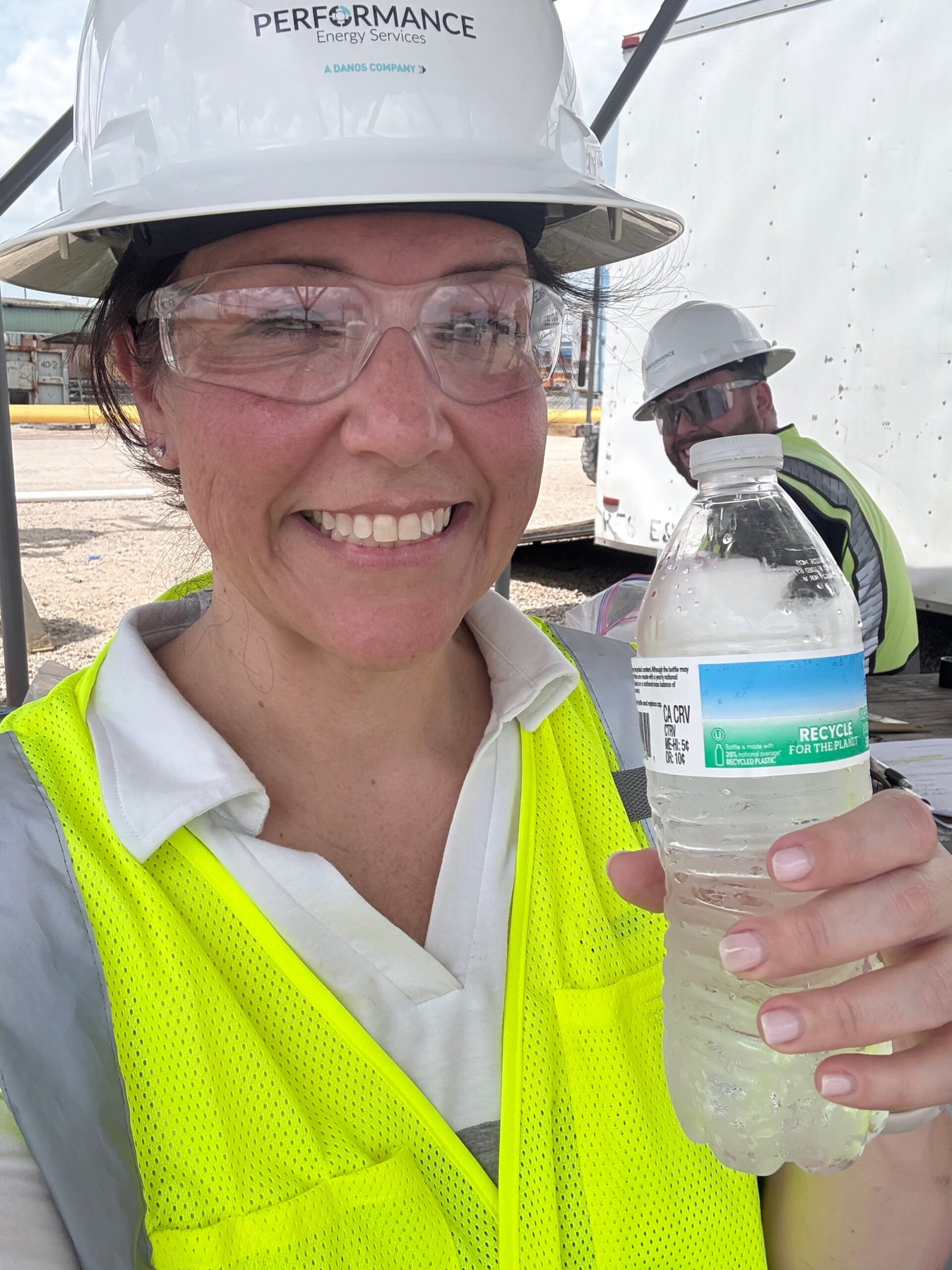
Pictured to the left is Danos Brand Services Supervisor Melanie Toups
and PES HSE Representative Clint Ordoyne at the PES Houma Ops facility.